Your big announcement might mean everything to you. But does it mean anything to the reader? After 30 years behind the editor’s desk, I’ve learned that the difference between an announcement and a compelling story is often what determines whether you get media coverage.
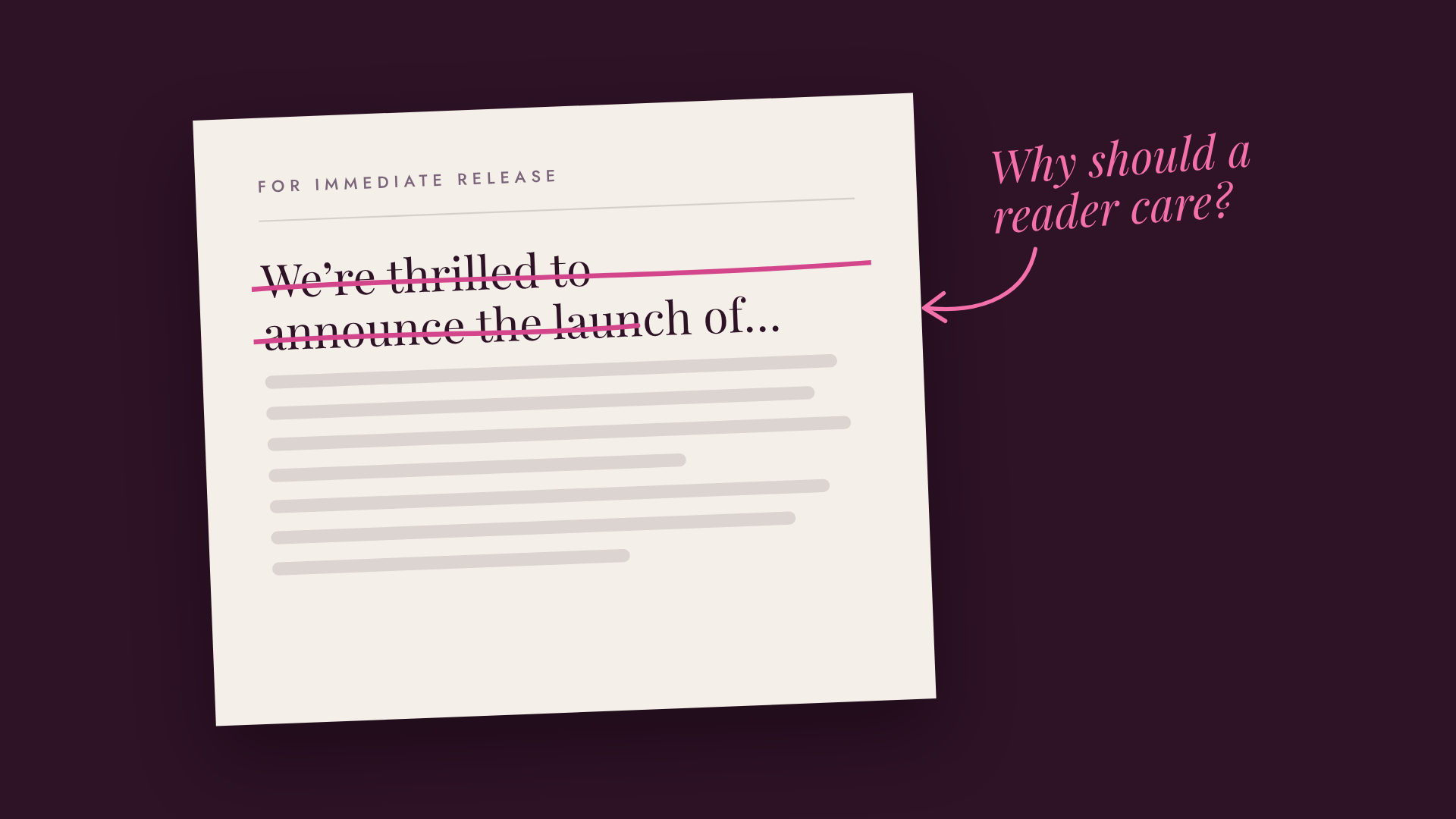
I can’t tell you how many times I’ve opened an email that began with some version of, “We’re thrilled to announce the launch of…”
A new company. A new product. A new podcast. A new book. A new coaching program. The list goes on.
And I get it. You’ve probably spent months, maybe even years, bringing your idea to life. You’ve invested your money, your energy, and a good portion of your sanity into making it happen. You’ve celebrated the small wins, navigated the setbacks, and finally reached the moment when you can tell the world what you’ve accomplished. Of course you’re excited. You should be.
But here’s where I must put my editor’s hat on. Why should anyone else care?
I don’t mean that to sound harsh. It’s simply the question an editor has to ask when deciding what deserves space in a publication. And it’s one of the most important questions you can ask yourself before pitching the media.
Throughout my career, including my years as Editor-in-Chief of top consumer magazines including SUCCESS®, Denver Life, Oxygen and others, I’ve reviewed countless pitches from entrepreneurs, publicists, authors, business leaders and celebrities. Many were announcing something new, and many assumed the announcement itself was the story. More often than not, it wasn’t.
I remember reading pitches that went into extraordinary detail about a company’s launch, its founder’s credentials, its mission statement, and how excited everyone was about the future. By the end, I knew quite a bit about the business. What I didn’t know was why our readers needed to know about it.
That’s where so many pitches lose their way.
An editor isn’t sitting behind a desk looking for businesses to congratulate. We’re trying to produce journalism that informs, entertains, challenges, inspires, or helps someone make sense of the world. Your announcement might be the starting point, but it isn’t necessarily the story.
There’s a Difference Between What’s New and What’s Interesting
Let’s say you’ve launched a new wellness company. Congratulations. Truly. But there are new wellness companies launching all the time, so what makes yours worth covering?
Perhaps you started it after discovering a significant gap in women’s health care. Maybe your research challenges a long-held belief about how we approach aging. Or perhaps you’re solving a problem that millions of women experience but rarely discuss.
Now I’m interested.
Not necessarily because you’ve launched a company, but because there’s a bigger conversation worth having. Your business becomes part of that conversation rather than the entire reason for telling the story.
This distinction is something I spent years discussing with my editorial teams. When we evaluated potential features, I wanted us to look beyond the obvious announcement and consider what was really happening. Was there a larger trend emerging? Was someone challenging conventional thinking? Did the story reveal something unexpected about leadership, business, culture, or human behavior? Most importantly, would our readers walk away having learned something they didn’t know before?
Sometimes an idea that sounded promising in an editorial meeting lost its appeal once we started asking those questions. Other times, something relatively ordinary developed into a fascinating feature because someone recognized the bigger picture. That’s one of the things I loved most about being an editor. We weren’t simply reporting that something happened. We were discovering why it mattered.
And sometimes, the most interesting part of a story had very little to do with the original announcement.
Think About the Person on the Other Side of the Page
I’ve always encouraged entrepreneurs and publicists to imagine the reader who has absolutely no connection to their business.
Picture someone picking up a magazine in an airport. They don’t know you, they’ve never heard of your company, and they haven’t been following your entrepreneurial journey on LinkedIn. They have no emotional investment in your success. They’re simply looking for something worth reading.
Now imagine they see a headline announcing that you’ve launched a new consulting company. Would they stop and read it? Probably not.
But what if that headline explored why accomplished executives are leaving traditional corporate careers to build businesses of their own? What if it examined a growing shift in how women define success, or why experienced professionals are choosing purpose over prestige?
Suddenly, there’s a reason to pay attention.
The person behind the business might be an excellent source for that story, particularly if they’ve lived through the experience and can offer a perspective that goes beyond the obvious. Their launch becomes relevant because it illustrates something larger.
I’ve spent much of my career thinking about the person on the other side of the page. Not the advertiser, the publicist, or the individual hoping to be featured, but the reader. Because ultimately, that’s who an editor is responsible for serving.
The Best Stories Often Aren’t in the Press Release
One of my favorite parts of interviewing people over the years was discovering what wasn’t included in their prepared biography or talking points.
You could sit down with an incredibly accomplished entrepreneur and hear all the familiar details about growth, leadership, innovation, and success. Then, somewhere in the conversation, they’d mention something almost in passing. Perhaps it was a decision that nearly cost them everything, a personal experience that completely changed the direction of their business, or a belief they’d held for years before realizing they were wrong.
And suddenly, there it was. The story.
I’ve interviewed thousands of people throughout my career, from emerging entrepreneurs to household names, and I’ve found that the most memorable conversations rarely followed a press release. They moved beyond the polished accomplishments and into the experiences, decisions, and perspectives that made the person interesting.
That’s what separates a promotional message from meaningful editorial content. A press release tells me what you want people to know. A compelling story gives me a reason to explore something my readers will care about.
Of course, there are exceptions. Some launches are genuinely newsworthy. A medical breakthrough, a major acquisition, a significant technological innovation, or a product that fundamentally changes how an industry operates can absolutely warrant coverage. A new business opening in a small community might be an important story for a local publication, even if it wouldn’t make sense for a national consumer magazine.
This is why understanding the publication you’re approaching matters so much. Newsworthiness isn’t universal. It’s determined by the audience, the timing, the editorial direction, and the significance of the information being presented. A story that isn’t right for one publication may be exactly what another editor is looking for.
The mistake is assuming that because something is important to you, it must be important to everyone else.
I’ve Been on Both Sides of This Conversation
There’s an interesting irony in this new chapter of my career. After more than three decades working inside the media, I’ve become an entrepreneur myself.
I’ve launched my own Academy and advisory business, developed digital guides, built new partnerships, and started creating things that carry my own name rather than the name of a publishing company. I’ve experienced the excitement of bringing an idea into the world and wanting to share it with everyone.
It’s personal. It’s meaningful. And it’s an extraordinary amount of work.
But having spent so many years on the other side of the inbox, I also know that my excitement doesn’t automatically make something editorially relevant. I still have to ask myself the same questions I asked the entrepreneurs and publicists who pitched me throughout my career. Why now? Why this? What does it mean beyond my own business? And why would someone who has never heard my name want to read about it?
It’s a useful reality check, even for someone who has spent her professional life telling stories. Perhaps especially for someone like me.
I also understand something now that I didn’t fully appreciate when I was exclusively on the editorial side: how emotionally invested founders are in what they create. When you’ve poured yourself into building something, it can be difficult to separate the personal significance of the achievement from its broader relevance.
That’s completely understandable. But it’s also why learning to think like an editor is such a valuable skill.
You must be willing to step outside your own experience and look at your work through someone else’s eyes.
The Story Is Bigger Than the Announcement
If you’re preparing to launch something, I encourage you to spend less time thinking about how to announce it and more time considering the conversation it belongs to.
What problem prompted you to create it? What have you discovered along the way? What are people in your industry getting wrong? Is there a shift happening that your experience helps explain? What can someone learn from your journey, even if they never become your customer?
Those questions can reveal a far more compelling editorial angle than the launch itself.
For example, imagine an entrepreneur pitching a story titled, “Founder Launches New Leadership Consulting Company.” It’s straightforward, but it doesn’t offer much beyond the announcement.
Now consider a story exploring “Why Successful Executives Are Walking Away From the Careers They Spent Decades Building.”
The second idea opens the door to a much more interesting discussion about identity, ambition, workplace culture, and the changing definition of success. It invites multiple perspectives and offers readers something to think about in their own lives. If the entrepreneur has relevant experience or insight, they could become a valuable voice in that conversation.
That’s the difference between asking a journalist to promote your business and offering them a story worth exploring.
And believe me, editors can tell the difference.
Before You Hit Send
After 30 years behind the editor’s desk, I can tell you that the pitches that captured my attention weren’t necessarily the ones announcing the biggest achievements. They were the ones that made me curious. They introduced an idea I hadn’t considered, offered a fresh perspective on something familiar, or helped me see how one person’s experience connected to a much larger conversation.
That’s what good storytelling does.
So, the next time you’re preparing a press release or reaching out to a journalist, take a moment before you hit Send. Read your pitch as though you know nothing about the person or company behind it. Remove the excitement, the credentials, and the promotional language, and ask yourself whether there’s still something interesting left.
If there is, you may have the beginning of a great story.
If there isn’t, keep digging. The most compelling angle may be hiding somewhere beneath the announcement.
Because at the end of the day, the media isn’t there simply to tell the world what you’ve done. Its job is to help people understand why something matters.
And once you understand that distinction, you’ll never look at your own press releases quite the same way again.
Want to find the story an editor will care about?
My digital guide, Sculpting Your Story, draws on decades of editorial experience to help entrepreneurs, executives, and thought leaders identify the angles that make their expertise relevant, memorable, and worth sharing.
Explore it at KerrieLeeBrown.com.