Thirty years of saying no, so you can hear yes.
Three guides from the other side of the editor's desk. Read them tonight, pitch with confidence tomorrow.
 Former Editor-in-Chief & Chief Content Officer
Most advice on visibility comes from people selling visibility. This comes from the person who said no.
For three decades Kerrie Lee sat on the commissioning side of the desk. She chose the covers, read the pitches and decided which ones survived. These guides set out what she was actually looking for, in the order you'll need it.
Think like an editor
Understand what happens after you hit Send, and why most pitches never get a reply.
Find the story
Turn what you know into an angle an editor wants to publish, with workbook pages to do it on.
Send the pitch
Subject lines, the email itself, the mistakes to avoid and how to follow up without closing a door.
Three guides, $99 each. Or all three for $249.
Each one stands on its own. Read in order, they take you from how editors think to the pitch itself.
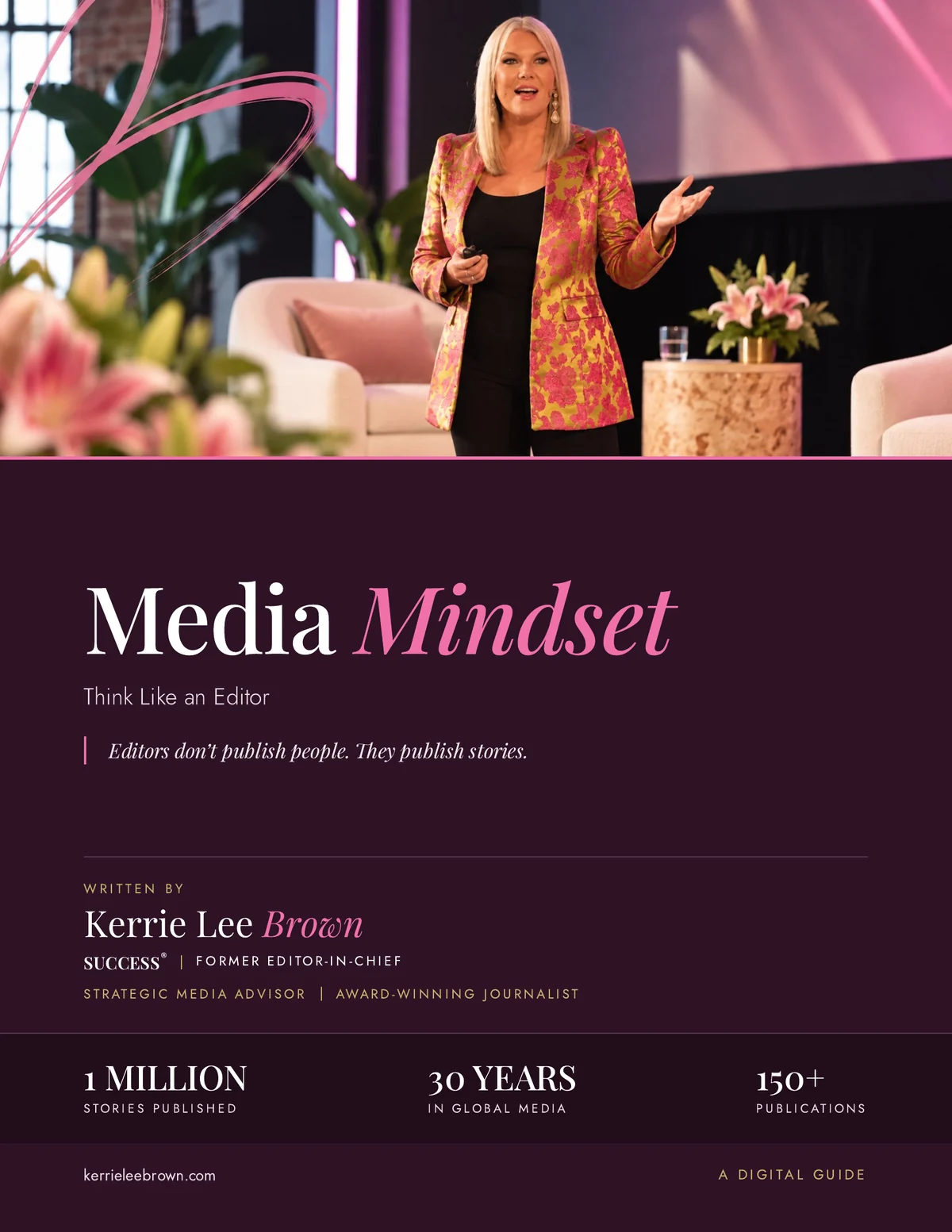 Guide one · $99
Media Mindset
Think like an editor. Why most pitches fail, and what really happens after you hit Send.
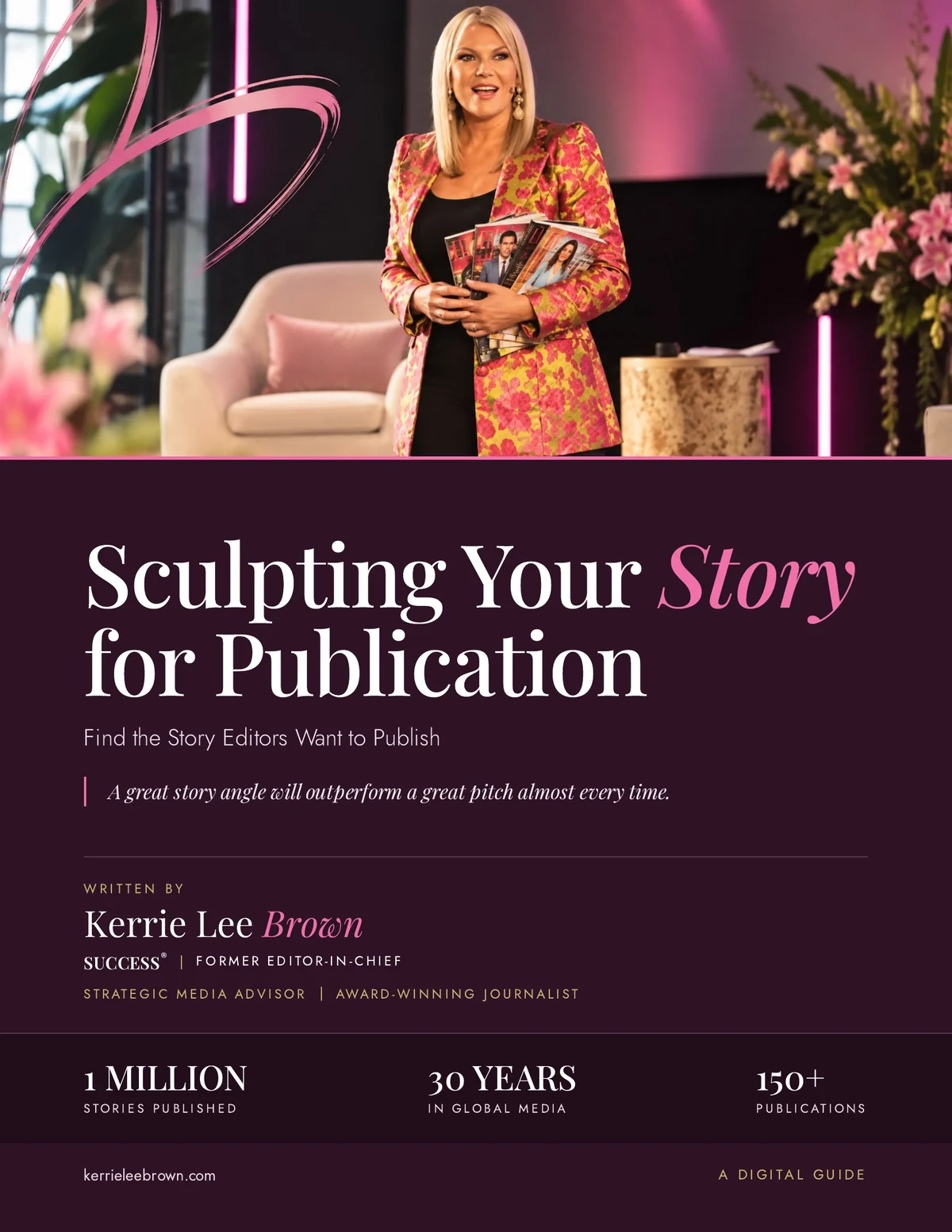 Guide two · $99
Sculpting Your Story for Publication
Find the story editors want to publish, with three workbook worksheets.
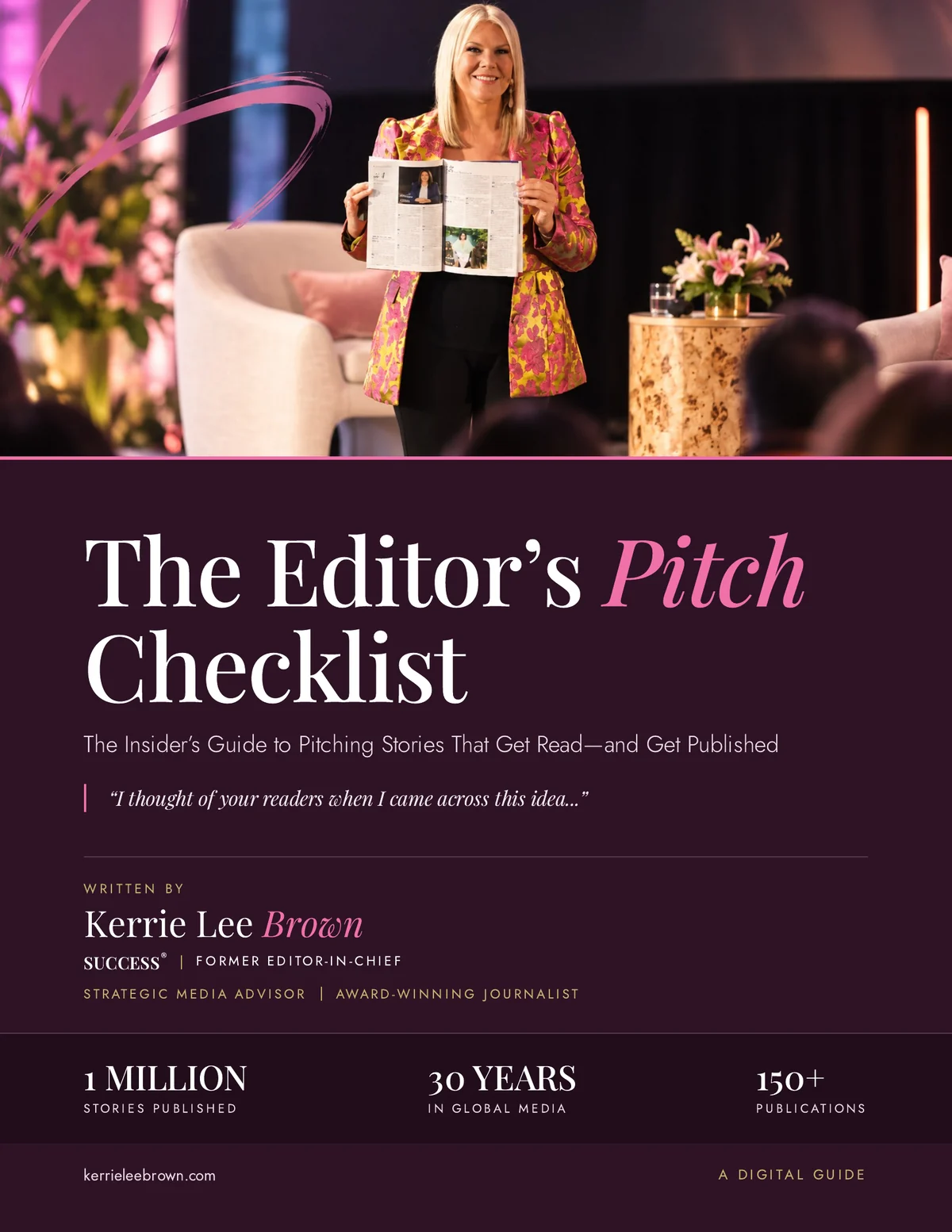 Guide three · $99
The Editor’s Pitch Checklist
Subject lines, the pitch email, nine mistakes to avoid and how to follow up without closing a door.
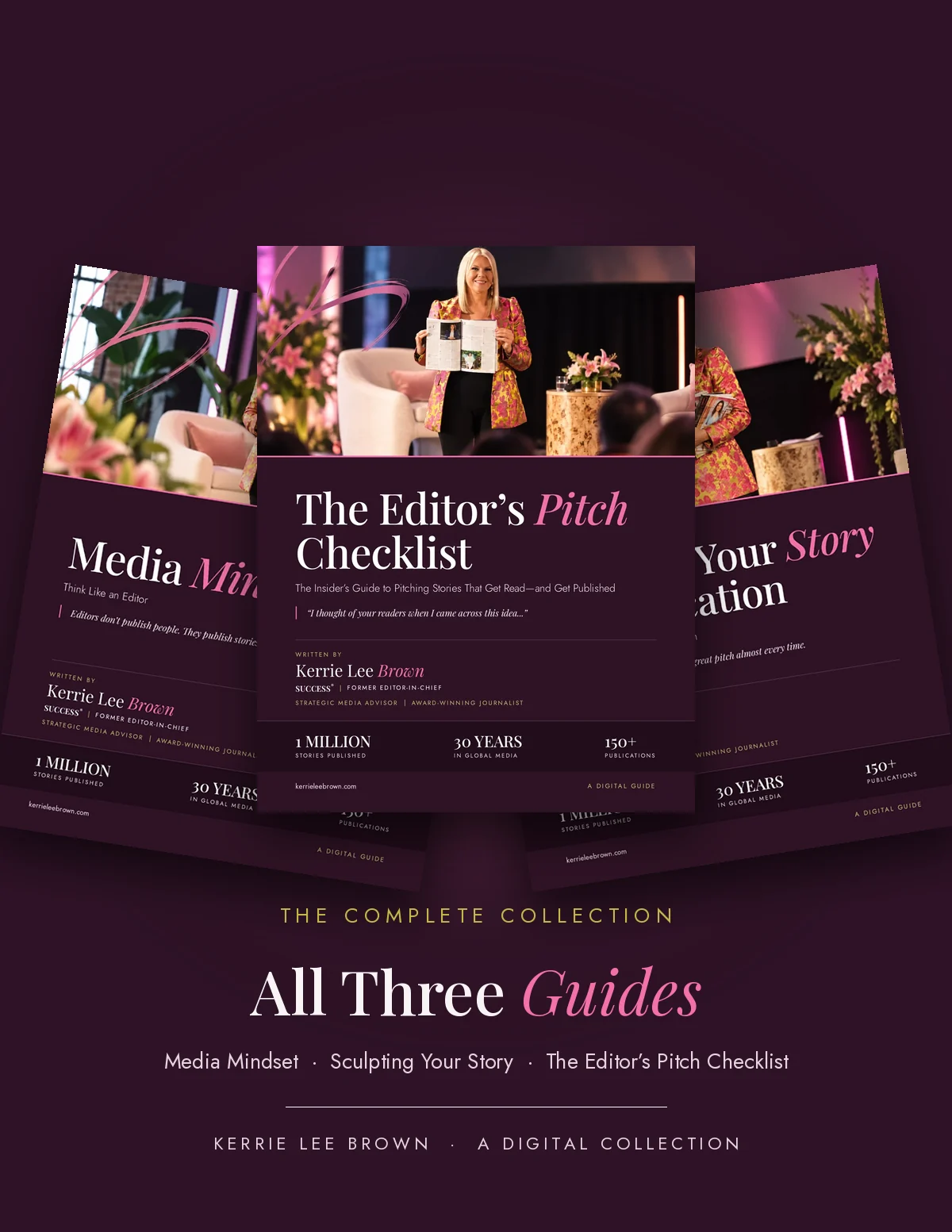 All three guides · $249
The Complete Guide Collection
Everything in one collection, plus a $50 credit toward the Editor Approved™ course.
Media Mindset
Think like an editor.
The starting point. Before you write a single pitch, understand how the person reading it decides. Editors don't publish people. They publish stories.
- 01
Why I Wrote This Guide
- 02
Why I’m Pulling Back the Curtain
- 03
Why Most Pitches Fail
- 04
The Editor’s Mindset
Sculpting Your Story for Publication
Find the story editors want to publish.
A good story is not the same as a great pitch. This guide closes the gap, then hands you three worksheets to find your own angle before you send anything.
- 01
Before You Pitch
- 02
The Difference Between a Good Story and a Great Pitch
- 03
Finding Your Story Angle
- +
Workbook
Your Pre-Pitch Checklist · Brainstorming Your Story Angles · Story Angle Exercise
The Editor’s Pitch Checklist
Write the pitch. Send it. Follow up properly.
The most practical of the three, and the longest. From the subject line an editor actually opens to the follow-up that keeps the door open, with worked examples and a checklist to run before you hit Send.
- 01
Writing Subject Lines That Editors Actually Open
- 02
The Perfect Pitch Email
- 03
Nine Mistakes to Avoid
- 04
A Final Reality Check
- 05
Follow-Up Etiquette
- 06
Bonus Examples
- 07
The Editor’s Pitch Checklist
- 08
Final Message
All three guides. One price.
The full sequence, from how editors think to the pitch itself, for less than buying them separately.
Yours in two minutes. Yours to keep.
- Check out and create your account
- Open your guide straight from the confirmation page or email
- Come back any time from My Account › My Guides
- Reads beautifully on phone, tablet and desktop
What format are the guides in?
Each guide is an online flipbook you read in your browser, page by page, on any device. Nothing to install.
How do I get back to my guides later?
Log in with the email you used at checkout and open My Guides in your account. Your guides are there for as long as you have your account.
Which guide should I start with?
Media Mindset. It explains how editors think, which makes the other two make sense. If you already know your story and just need to send the pitch, go straight to The Editor’s Pitch Checklist.
I bought one guide. Can I upgrade to the collection?
Email us and we will sort it out.
Will these guarantee me press coverage?
No one honest can promise that. What they will do is show you exactly what editors look for, so your pitch has the best possible chance of being read and answered.
“Editors don’t publish people. They publish stories.”