The warning signs don’t always look like exhaustion. Sometimes they look like ambition, dedication, and doing everything everyone expects of you. I know because I spent years convincing myself that pushing through was simply part of being successful.
I’ve always been a hard worker. Even as a young journalist, I was the person who wanted to take on another assignment, meet another deadline, and prove that I could handle whatever was thrown my way. I loved the pace of publishing, the creativity, the people, and the excitement of bringing stories to life. I loved being the person others could count on.
What I didn’t realize back then was how easily ambition could become something else entirely.
Over time, being dependable turned into being constantly available. Working hard became working all the time. And somewhere along the way, I started measuring my value by how much I could accomplish, how many people needed me, and how well I could keep everything moving without letting anyone see how tired I really was.
I didn’t call it burnout. I called it being successful.
At 39, I suffered a heart attack. It was a life-changing experience that forced me to confront my health, my priorities, and the way I had been living. I wouldn’t suggest that every stressful day or demanding deadline caused what happened to me. Heart attacks are medically complex, and my own heart history is part of that story. But the experience made me look very differently at the pressure I had normalized and the signals I had become so good at dismissing.
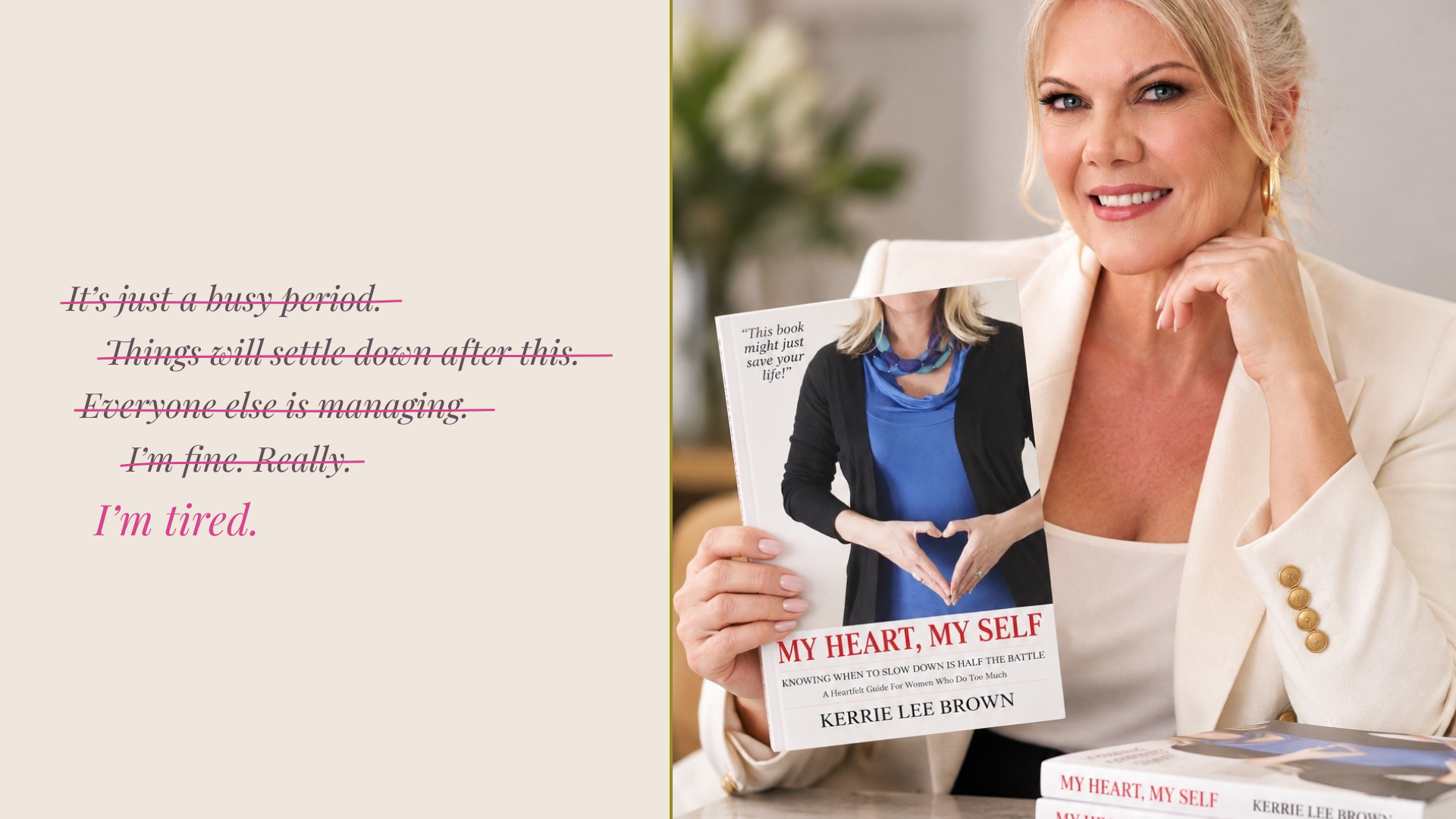
In my book, My Heart, My Self: A Heartfelt Guide for Women Who Do Too Much, I explore that relationship between achievement, self-worth, and the expectations we place on ourselves. Because I’ve come to believe that one of the greatest challenges for high-achieving women isn’t learning how to do more. It’s recognizing when doing more is costing us too much.
And sometimes, the warning signs are hiding in the very behaviors we’ve spent our careers being praised for.
When Being the Reliable One Becomes Your Identity
I think many women in leadership will recognize this feeling. You’re the one people call when something needs to get done. The person who solves problems, makes decisions, manages the unexpected, and somehow finds a way to fit one more thing into an already impossible schedule.
At first, it feels good to be needed. It validates your experience and reinforces the idea that you’ve earned your place at the table. But there’s a subtle shift that can happen when your identity becomes wrapped up in being the person who never drops the ball.
You stop asking whether you have the capacity to take something on. You simply say yes.
I’ve certainly been there. Throughout my media career, I’ve managed editorial teams, overseen publications, worked with demanding production schedules, and carried responsibilities that extended well beyond the traditional role of an editor. I was proud of what we accomplished, and I still am. But I also know how easy it is to become so accustomed to carrying responsibility that you forget you’re allowed to put some of it down.
The trouble with being the reliable one is that people often assume you’re fine because you always seem to have everything under control.
And sometimes, you start believing it yourself.
The Exhaustion You Keep Explaining Away
One of the most common things I hear from accomplished professionals is some version of, “I’m just going through a busy period.”
I’ve said it myself more times than I can count.
We’re finishing a major project. We’re launching something new. We’re restructuring a team. We’re preparing for an important event. We’re trying to reach the next level in our careers.
There’s always a perfectly reasonable explanation for why we’re exhausted, and usually a promise that things will settle down once the current challenge is behind us.
Except the next challenge is already waiting.
What concerns me is how easily chronic exhaustion becomes accepted as part of professional life. We start treating poor sleep, irritability, difficulty concentrating, and a constant sense of urgency as inconveniences rather than signals that something needs attention.
Of course, everyone experiences demanding periods. A difficult week doesn’t automatically mean you’re burned out. But when you can’t remember the last time you felt genuinely rested, or when even the things you used to enjoy start to feel like obligations, it’s worth paying attention.
I know how tempting it is to dismiss those feelings, especially when you’re surrounded by people who seem to be managing just as much.
But someone else’s ability to keep going doesn’t mean your body or mind needs less care.
When Rest Starts to Feel Like Something You Have to Earn
This is one of the patterns I explore in My Heart, My Self, and it’s deeply personal to me.
Why do so many of us feel guilty when we’re not being productive?
Think about how often we justify taking time for ourselves. We tell people we’ve earned a vacation because we’ve been working so hard. We explain that we’re taking a day off because we’ve finished a major project. Even a quiet afternoon can come with an internal list of everything we should be doing instead.
Somewhere along the way, rest became a reward rather than a basic human need.
I remember periods in my career when I could be physically away from work but mentally still sitting at my desk. I’d be thinking about deadlines, unfinished conversations, staffing decisions, or what needed to happen the following week. Even when I wasn’t working, I wasn’t necessarily recovering.
And I suspect many executives and entrepreneurs know exactly what that feels like.
You can be sitting at dinner with your family while mentally rewriting tomorrow’s presentation. You can be on vacation while checking your phone every few minutes. You can have an entire weekend to yourself and still feel as though you’re falling behind.
That’s not always ambition. Sometimes it’s a sign that you’ve forgotten how to disconnect from the expectations you’ve built around yourself.
The Subtle Changes No One Sees
When people think about burnout, they often imagine someone who can barely get out of bed or who has reached a dramatic breaking point. But prolonged stress and burnout can show up in much quieter ways.
You might notice that you’re less patient with people you love. Small decisions feel unusually difficult. Your enthusiasm for work that once energized you begins to fade. You find yourself becoming cynical, distracted, or emotionally distant, even though you’re still performing well.
Perhaps you’re getting everything done, but there’s very little joy in any of it.
I think that’s one of the hardest things for high achievers to acknowledge. From the outside, life can look wonderful. Your career is progressing, your business is growing, people respect you, and opportunities keep arriving. You have every reason to feel grateful.
So, when something feels off, you question yourself rather than the circumstances.
You tell yourself you’re being ungrateful. You remind yourself how fortunate you are. You compare your problems with those of people facing far greater challenges.
And you keep going.
But gratitude and exhaustion can exist at the same time. You can love your work and still need a break from it. You can be proud of your accomplishments and recognize that the way you’re achieving them is no longer sustainable.
Those things aren’t contradictions. They’re part of being human.
What My Heart Attack Changed About Success
I wish I could tell you that surviving a heart attack at 39 instantly transformed the way I lived.
It certainly changed my perspective, but changing deeply ingrained habits is rarely that simple.
I still loved my career. I still had goals. I still wanted to lead, create, achieve, and make a difference. Those parts of my personality didn’t disappear because I’d experienced a serious health crisis.
And to be clear, I didn’t want them to.
What began to change was my understanding of what I was willing to sacrifice in the pursuit of success.
When you’ve faced the possibility of losing your life, the things you once considered urgent start to look very different. The unanswered email, the meeting that runs late, the approval someone needs immediately—those things still matter in a professional setting, but they no longer deserve to occupy the same place as your health and the people you love.
I’ve thought about that lesson often throughout my career, especially during periods when my responsibilities were significant and the pressure was relentless.
There were times when I recognized old habits creeping back in. Saying yes too quickly. Taking on more than I should. Feeling responsible for outcomes that weren’t entirely within my control. Convincing myself that I could manage just a little more before slowing down.
That’s why I don’t believe wellbeing is something you figure out once and then move on from. It’s an ongoing relationship with yourself, one that requires attention even when life is going well.
Perhaps especially then.
The Pressure to Appear Unshakeable
There’s another aspect of leadership that doesn’t get discussed enough: the expectation that the person in charge should always appear composed.
When you’re responsible for a team, a company, or a family, you don’t necessarily feel you have the luxury of admitting you’re overwhelmed. People look to you for answers and reassurance. You want to be steady, capable, and confident, particularly when circumstances are uncertain.
I understand that instinct. I’ve led teams through demanding transitions and made difficult decisions while managing my own concerns behind the scenes.
But I’ve also learned that strength doesn’t have to mean pretending everything is fine.
There’s a difference between being a resilient leader and becoming someone who never allows themselves to acknowledge their own limits.
The leaders I respect most aren’t necessarily the ones who can work the longest hours or carry the heaviest workload. They’re the ones who understand that their ability to lead depends, in part, on their ability to care for themselves.
They know when to ask for help. They recognize when something needs to change. And they understand that setting boundaries isn’t an admission of weakness.
It’s a sign of self-awareness.
You Don’t Have to Wait for a Wake-Up Call
One of the reasons I wrote My Heart, My Self was because I wanted other women to reflect on these questions before experiencing the kind of health crisis that changed my life.
I don’t want anyone to believe that a heart attack is the inevitable consequence of working too hard, because it isn’t. Nor should persistent symptoms be dismissed as burnout when they may have another medical explanation. If you’re experiencing ongoing exhaustion, changes in your health, or symptoms that concern you, it’s important to speak with a qualified healthcare professional. Chest pain, shortness of breath, or other possible heart attack symptoms require urgent medical attention.
But I do want people to understand that their wellbeing deserves attention long before a crisis occurs.
You don’t have to reach the point of complete exhaustion to reconsider your schedule. You don’t have to resent your career before establishing healthier boundaries. And you don’t have to justify protecting your personal time by proving how much you’ve already accomplished.
I sometimes wonder how different our professional lives would look if we celebrated people for knowing their limits as much as we celebrate them for exceeding expectations.
What if we stopped treating constant availability as a measure of commitment? What if we recognized that someone who takes care of their health, maintains meaningful relationships, and makes room for a life outside work might be demonstrating the kind of leadership we should aspire to?
I think we’d have a very different conversation about success.
The Question I Ask Myself Now
At this stage of my life, after more than three decades in media and a significant personal and professional journey, I still have ambitious plans. I’m building new businesses, writing, speaking, mentoring, and pursuing opportunities that genuinely excite me.
I haven’t lost my drive, and I don’t intend to.
But I am much more conscious of the difference between ambition that energizes me and pressure that slowly depletes me.
When I find myself becoming overwhelmed, I try to ask a question that would have been useful to the younger version of me: Am I doing this because it matters, or because I’ve convinced myself I have to?
It’s a simple question, but the answer can be surprisingly revealing.
Sometimes the work genuinely matters. Sometimes a demanding period is unavoidable. But other times, the pressure comes from expectations we’ve placed on ourselves, habits we’ve carried for years, or a fear that slowing down will somehow make us less valuable.
I spent a long time believing that being successful meant being able to handle everything.
Today, I see it differently.
Success isn’t just about what you build, what you earn, or how many people admire what you’ve accomplished. It’s also about whether you have the health, energy, and emotional capacity to enjoy the life you’ve worked so hard to create.
And that’s something I wish I’d understood much earlier.
If you’re a leader, an entrepreneur, a parent, or simply someone who has become very good at taking care of everyone and everything else, I hope you’ll give yourself permission to pay attention to what you need, too.
Not after the next promotion. Not when the business finally settles down. Not when everyone else has been taken care of.
Now.
Because the signs we explain away as ambition are sometimes the very things asking us to reconsider how we’re living.
And your life deserves more than whatever energy you have left at the end of the day.
A Personal Note
I wrote My Heart, My Self: A Heartfelt Guide for Women Who Do Too Much to share the lessons, reflections, and personal experiences that reshaped my understanding of success after surviving a heart attack at 39. It’s for women who are used to being strong for everyone else and are ready to make room for themselves, too.
You can learn more about my book at KerrieLeeBrown.com.